


Live Trading Sessions Explained for Real-Time Practice
What live trading sessions are
Live trading sessions are real-time events where an instructor, trading desk, or group leader shares market analysis, trade ideas, and step-by-step execution while markets are open. Formats include streamed desks where an instructor trades live and narrates decisions, guided alert services that publish time-sensitive entry, target, and stop-loss instructions, and collaborative screen-share sessions used for group planning and practice.
Live sessions differ from recorded lessons because they reveal decision making under actual market conditions. They differ from demo or paper trading because they move real capital in live markets, which changes execution, slippage, and emotional responses. Treat live sessions as supervised, time-bound practice with real consequences rather than as a shortcut to profits.
Common live session formats
- Streamed desk: an instructor trades live and explains the rationale in real time.
- Guided alerts: time-stamped signals with precise entry, target, and stop-loss levels.
- Collaborative screen-share: small group planning, order entry practice, and post-trade reviews.
Who benefits from live trading sessions
Live sessions are useful when combined with a learning plan. Three user profiles typically benefit.
Beginners
Beginners benefit from seeing disciplined executions and the step-by-step application of a trading plan. Watching a structured decision process helps convert abstract rules into concrete actions and reduces the temptation to guess entries or abandon stops.
Intermediate traders
Intermediate traders can use live sessions to reinforce discipline, practice consistent position sizing, and test execution speed in real time. Sessions help embed routine tasks such as logging trades, following predefined exits, and applying risk controls under pressure.
Experienced traders
Experienced traders may use live sessions as a scanning or coordination tool, to capture short-term opportunities they might not monitor themselves, or to collaborate on macro views. They should ensure any signal fits their existing risk framework and portfolio plan.
Proxima Learning combines courses, live sessions, and portfolio advisory to help traders link tactical setups to long-term goals. Review the course catalog and live offerings on the Proxima Learning site to compare formats and trial options.
Seven-point readiness checklist
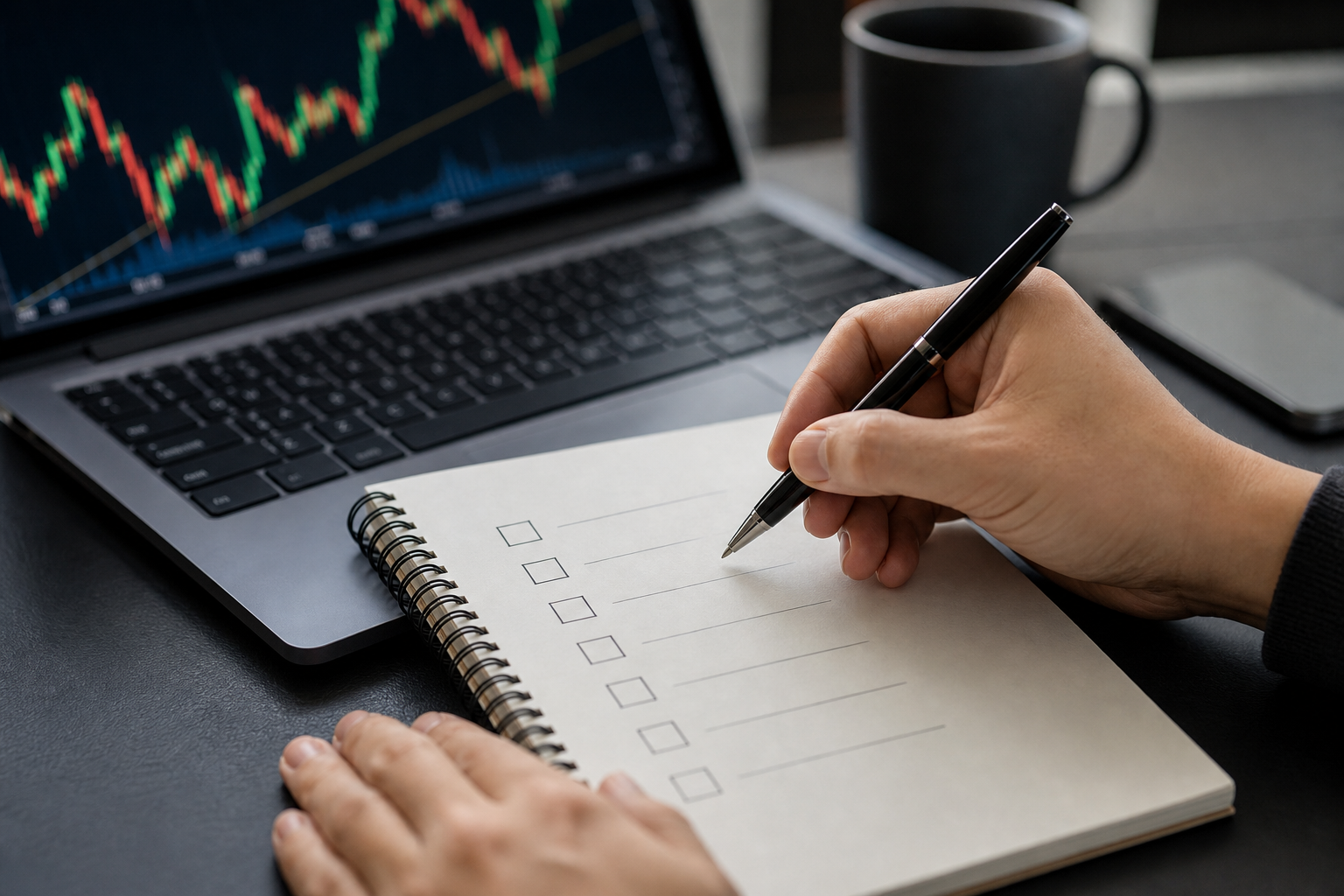
Answer each item with a yes or no. If you answer no to any item, pause and fix that gap before trading capital in a live session.
- Account and capital: I have a funded brokerage account sized for discretionary live trades and an emergency cash buffer separate from trading capital. Example action: confirm margin rules and available buying power for the instrument you will trade.
- Platform and order entry skills: I can place market, limit, and stop orders reliably on my platform under time pressure. Example action: practice placing different order types in demo until you are consistent.
- Defined trading plan: I have written entry, target, and stop-loss rules for the trade types I will accept during the session. Example action: keep a one-page trade plan visible during the session.
- Risk tolerance and position sizing: I know my per-trade risk limit and how to size positions so a single loss stays within that limit. Example action: calculate position size based on a fixed percentage of capital or a fixed dollar risk amount.
- Psychological readiness and time availability: I can accept intraday volatility without abandoning my plan and I can focus for the session duration. Example action: schedule sessions when you can remain distraction free and log your emotional state after trades.
- Demo rehearsal: I have practiced the provider workflow in a demo account for at least several sessions. Example action: complete three full demo sessions that mirror the providers timing and alert channels.
- Provider transparency: The provider offers clear trade rules, a trial or replay sample, and written processes rather than only performance claims. Example action: request a recorded session and a sample trade log before paying.
Operational readiness and rehearsal are widely recommended by industry checklists. If you need a structured place to start, use a demo account to validate timing, slippage, and your ability to follow the provider’s workflow.
Questions to ask a live-session provider
Use these questions to evaluate any paid or free live-session offer. Insist on clear answers in writing or via a recorded sample.
Credentials and transparency
- What is your trading process and how do you document trade ideas?
- Do you publish rules for entries, targets, and stop-losses or do you only highlight outcomes?
- Can you provide a sample live session or a trial period so I can see execution style before paying?
Signal rules and execution
- Are signals time-stamped and do they specify exact entry, target, and stop-loss levels?
- Do you publish typical slippage expectations and the market conditions where a signal would be withdrawn?
- Who executes the trade: do you recommend manual execution or provide an automated order route?
Risk controls and limits
- What position sizing rules do you recommend and do you enforce a maximum size per account?
- What are your rules for exiting losing trades and for partial profit-taking?
Proof of process not performance
- Can you share logs or recordings that show the decision process rather than only a performance chart?
- Do you provide a post-session review or trade journal so members can audit decisions?
Support, policies, and communication
- What channels do you use for alerts and support, such as chat, email, or a proprietary app?
- Do you offer refunds or credits for missed signals caused by provider error?
Providers that offer demo samples and clear documentation reduce onboarding risk. Ask for replay access, a representative sample of sessions, and a written statement of what the trial includes before you commit.
Red flags and trust signals
Red flags to avoid
- Guaranteed returns or promises of consistent profits.
- Opaque signal rules or an inability to show time-stamped entries and stop-losses.
- Pressure to increase position size or to add leverage quickly.
- No trial, no recorded sessions, and no clear refund or dispute policy.
Positive trust signals
- Clear documented entry, target, and stop-loss framework for every signal.
- Availability of trial sessions, replay recordings, or transparent logs of decisions.
- Independent documentation of process, educational content that explains the strategy, and a community or support channel for questions.
Trust is built by process and access to evidence. A provider that can show how decisions were made and that welcomes post-session review is easier to evaluate than one offering only highlighted results.
How live sessions fit with structured learning and portfolio advisory

Live sessions are a tactical tool that should not replace foundational learning or portfolio planning. Use structured courses to learn core concepts such as technical and fundamental analysis, position sizing, and trading psychology. Use live sessions to practice execution and to bridge the gap between theory and real-time decision making. Use portfolio advisory when short-term activity requires a formal allocation change or when you need help fitting active trades into a long-term plan.
Practical examples:
- If you have a long-term portfolio of 90 percent passive holdings and 10 percent active capital, convert no more than the agreed active share to live signals and log each trade for review.
- If a provider issues frequent intraday signals, restrict active exposure to a pre-set percent of your liquid capital and avoid using margin until you have a documented positive edge.
- Use portfolio advisory to decide whether successful short-term strategies justify a permanent reallocation or a separate sleeve in your portfolio.
Post-session reviews are essential. Track metrics such as entry adherence, slippage, win rate, average risk-reward, and emotional deviations from your plan. A disciplined review process converts live sessions into repeatable learning and helps avoid overtrading.
For a learning-first workflow that pairs structured courses with practice opportunities, review Proxima Learning’s online trading classes to see how live sessions and signals are offered alongside courses and advisory.
Decide and act: next steps
Follow this four-step action list to make a safer decision today.
- Run a demo rehearsal of the provider’s workflow for at least three sessions to confirm timing, slippage, and your execution routine.
- Answer every item in the seven-point readiness checklist. Do not go live with any unresolved no answers.
- Ask the provider the vetting questions above and request written trade rules, a trial session, or replay access before paying.
- Agree a fixed risk per trade, log all trades, and commit to a 10-session review before increasing trade size.
When you are ready to compare formats and request trial access, view Proxima Learning’s course catalog and live offerings. Proxima Learning provides structured education, live signals, and portfolio advisory so you can move from learning to live execution with defined guardrails. Explore online trading classes: Online Trading Classes: Build Skills with Pros or visit the main site: Proxima Learning.
Frequently asked questions
What is a live trading session and how does it differ from demo trading
A live trading session is a real-time event where trades or signals are issued and executed in live markets. Demo trading uses simulated capital. The difference matters because real capital produces different emotional responses and real slippage that can change decision making and outcomes.
How do I know I am ready for live trading sessions
Complete the seven-point readiness checklist in this article. The key items are a funded account sized to your risk tolerance, order-entry proficiency, a written plan with entry-target-stop-loss rules, demo rehearsal, and provider transparency.
What questions should I ask before joining a live trading provider
Ask for documented trade rules, time-stamped signals, trial or replay access, position sizing guidance, rules for stop-loss and exits, and the provider’s communication and refund policy. Prefer proof of process over raw performance claims.
What are the main red flags to avoid with live trading sessions
Avoid any provider promising guaranteed returns, lacking trial or replay material, or pressuring you to increase leverage or position size. Opaque rules about entries and exits are another major red flag.
How do live trading sessions fit into a long-term portfolio plan
Use live sessions for tactical trades while keeping most capital aligned to long-term allocation objectives. Work with portfolio advisory if short-term activity requires an allocation change. Combine live sessions with structured learning so tactical decisions do not undermine strategic goals.