

How can stock market education for beginners prepare you to trade?
If you are searching for stock market education for beginners, this eight-step checklist lays out exactly what to prepare before you place a funded trade. The checklist starts with objectives and account choice, moves through broker selection and practice trading, and finishes with disciplined risk rules and a start-up review plan. Where appropriate, the article cites practical Canadian guidance for account choices and execution checks so you can act with clarity and lower avoidable mistakes.
Quick 8-step pre-trade readiness checklist
- Define your objective, time horizon, and risk tolerance
- Choose the right Canadian account for your goals
- Shortlist a beginner-friendly broker using objective criteria
- Complete core beginner coursework and run practice trades
- Set and document core risk rules: position size, entry, target, stop loss
- Learn order types and follow an execution checklist every trade
- Evaluate paid trading signals and portfolio advisory, then choose a starting path
- Start small, track every trade, and schedule regular reviews
Step 1: define your objectives, time horizon and risk tolerance
Before any technical lesson, write down why you plan to trade or invest. Are you building long-term retirement capital, seeking dividend income, or testing short-term active trading? Record a time horizon for each goal, the maximum drawdown you could tolerate, and the total capital you can afford to risk without affecting living expenses. Those baseline answers determine the products you use, the account type you open, and your position-sizing rules.
What to record now
- Primary objective: growth, income, or short-term trading
- Target time horizon for this objective
- Maximum acceptable drawdown, expressed as a percent
- Initial capital available and monthly contributions
Why this matters
Clear objectives stop you from chasing every tip. A longer horizon supports index funds and portfolio advisory, while short horizons require strict position sizing and faster execution discipline.
Step 2: choose the right Canadian account for your goals
Account choice affects taxes and suitability for goals. For many Canadians a Tax Free Savings Account, TFSA, is useful for long-term, tax-free growth, while an RRSP can be preferable for retirement contributions depending on income and tax brackets. Newer options such as the First Home Savings Account, FHSA, or a regular taxable account may be better for specific goals. For practical explanations that reflect Canadian rules, see Wealthsimple’s beginner resources on how to buy stocks and how the stock market works.
Consult a tax professional for personal advice. Use your chosen account type when comparing brokers so you do not need to move positions between account structures later, which can have tax and administrative consequences.
When to prefer TFSA
If you want tax-free growth and are within contribution limits, a TFSA is often the easiest starting point for smaller portfolios aimed at long-term appreciation.
When RRSP is appropriate
Use an RRSP when retirement tax deductions and future withdrawal plans align with your income and retirement timeline.
Step 3: shortlist a beginner-friendly broker using objective criteria
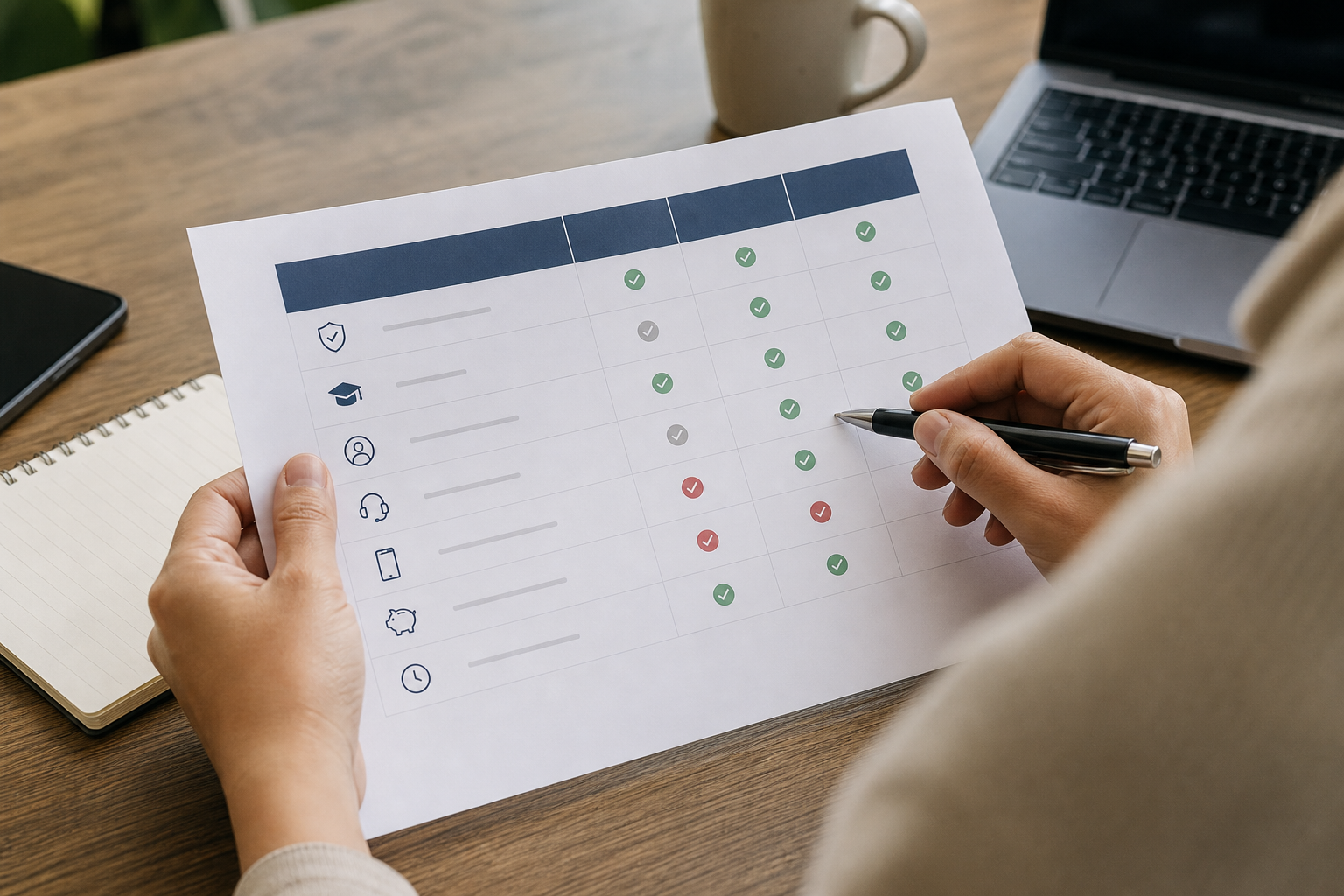
Opening the right brokerage account is a foundational decision. Authoritative guides recommend starting by comparing platforms on objective factors before you open an account. Consider fees and commissions, the account types supported such as TFSA and RRSP, minimum deposits, mobile and web usability, available order types, educational resources, execution quality, and customer support hours.
Quick checklist to compare three brokers
- List fees per trade and any monthly or inactivity charges
- Confirm supported account types: TFSA, RRSP, FHSA, taxable
- Open a demo or paper account to test the interface
- Note available order types: market, limit, stop, stop-limit
- Check whether the broker offers educational content and customer support
What to test in a demo account
Place simulated market and limit orders, check order confirmations, and time how long it takes to locate a symbol. Guides from StockBrokers and Kiplinger list account opening and order type understanding as critical first steps for beginners.
Step 4: complete core beginner coursework and run practice trades
Before risking real capital, finish courses that cover the mechanics of markets: what shares and ETFs are, the difference between technical and fundamental analysis, order types, position-sizing basics, and trading psychology. Paper trading or a simulation account lets you test entries, exits, and execution without real capital at risk. InvestorTrip emphasises that preparation is more important than immediate stock selection for first-time buyers.
Minimum course syllabus
- Market structure and order execution
- ETF basics and index diversification as beginner strategies
- Technical analysis essentials and simple chart setups
- Fundamental screening basics for longer horizon investors
- Trading psychology and journaling
For a structured learning path that combines lessons with practice, see Proxima Learning’s Stock Market Education: Learn Fast & Trade Smarter.
How long to paper trade before funding
There is no fixed time. Use performance and consistency metrics. Only consider real funds when you repeatedly execute your plan in a demo and document that your rules produced consistent, repeatable behaviour.
Step 5: set and document core risk rules: position size, entry, target, and stop loss
Write down the exact rules you will always follow. Every trader must commit to a maximum percentage risk per trade, a method to compute position size from stop loss distance, a clear entry condition, an explicit profit target, and a stop-loss level. RBC Direct Investing recommends verifying order details and confirming fills as part of a checklist to avoid common execution mistakes.
Simple position-size formula to use
Decide a max percent risk per trade, for example 1 or 2 percent of your total capital. Position size equals (capital times max risk) divided by the dollar distance between entry and stop loss. That formula keeps risk consistent across trades.
How to pick a stop loss you can stick to
Choose stops that respect technical support or volatility, not arbitrary percentages. If you cannot accept the required stop distance without risking too large a position, reduce the size.
What constitutes a rule violation
Examples include moving a stop to avoid a losing trade, doubling size after a losing streak, or entering without checking the account and order details. Treat violations as data to review, not as a reason to continue trading immediately.
Step 6: learn order types and follow an execution checklist every trade

Understand market, limit, stop, and stop-limit orders, and know time-in-force settings. Partial fills, halted symbols, or rejected orders happen. Use a pre-order checklist and a post-order confirmation routine so execution errors do not become behavioural errors. RBC Direct Investing and StockBrokers describe common order mistakes and the value of an execution checklist.
Pre-order execution checklist
- Verify ticker symbol and exchange
- Confirm account and cash or margin availability
- Check order type, size, and limit price if applicable
- Set and record entry, target, and stop loss before sending the order
Post-order checklist
- Confirm fill or partial fill
- Record executed price and time in your trade journal
- If unclear or rejected, contact broker support immediately
Step 7: evaluate paid trading signals and portfolio advisory, and pick your starting path
Paid signals and advisory services can accelerate learning but they require careful vetting. Look for transparency about historical performance, clear entry, target, and stop instructions, an audited or trial period, and a clear explanation of risk management. Fidelity describes diversification and index funds as accessible options for beginners who prefer simplicity over picking single stocks.
How to evaluate a signals provider
- Ask for an audited performance record or a trial period
- Check whether each signal includes entry, target, and stop-loss levels
- Confirm how signals are delivered and how quickly they arrive
- Test signals in a paper account before following them with real money
Decision flow: which starting path fits you
- Novice: structured beginner course plus paper trading only
- Active learner: course plus vetted intraday or swing signals for practice
- Investor-focused: portfolio advisory plus foundational education
Proxima Learning combines structured education, real-time signals, and portfolio advisory on one platform, which can simplify the transition between learning and execution without promising outcomes.
Step 8: start small, track every trade, and schedule regular reviews
When you move to live trading, start with a small proportion of your intended capital so execution psychology becomes part of the test. Track win rate, average gain and loss, risk-reward ratios, and rule violations in a trade journal. Schedule a weekly review for execution and a monthly review for performance metrics and plan adjustments. InvestorTrip recommends focusing on documented plans and consistent review rather than chasing individual winners.
What to expect in the first 3 months
- Volatile emotions and an adjustment to execution slippage
- Learning curve in fill prices and timing compared with paper accounts
- Evidence whether your rules are realistic when real capital is at stake
When to increase size or pause trading
Increase size only after consistent, rule-abiding performance. Pause and review if you see a cluster of rule violations or a drawdown beyond your recorded tolerance.
Frequently asked questions
How long does it take to learn enough to trade with real money?
There is no universal timeline. Many beginners benefit from completing a basic course, paper trading until they can execute their plan reliably, and then moving to small live trades. Progress depends on time committed, prior finance literacy, and discipline.
Are paid trading signals safe to follow for beginners?
Paid signals are not automatically safe. Vet providers for transparency, clear entry and stop-loss guidance, and an audited or trial period. Test signals in a simulation account first and never follow signals without your own risk rules.
How much capital do I need to start trading stocks?
There is no minimum that fits everyone. Start with an amount you can afford to lose while you learn. The required capital will depend on your chosen position-size rules and the minimum trade sizes of the securities you target.
Which Canadian account should a beginner open first: TFSA or RRSP?
TFSA is often recommended for tax-free growth and flexibility, while RRSP can be preferable for retirement-focused contributions depending on income. See Wealthsimple’s overview to compare TFSA and RRSP differences before deciding.
References and further reading: Fidelity’s beginner guide to investing, RBC Direct Investing’s trading checklist, StockBrokers’ how-to-trade overview, InvestorTrip’s pre-trade checklist, and Wealthsimple’s Canada-focused explainers are helpful for the steps above.
Ready to learn with Proxima Learning? Start with structured lessons and paper trading, then use vetted signals or advisory only after you have documented risk rules and a review cadence.
Selected references: Fidelity, InvestorTrip, Wealthsimple, RBC Direct Investing, and StockBrokers. Proxima Learning: Stock Market Education: Learn Fast & Trade Smarter.